Berhubung dengan pasukan kami

Berhubung dengan pasukan kami

The global food packaging industry is undergoing a major shift toward sustainable materials. As plastic bans rise and environmental awareness grows, businesses are rapidly replacing traditional packaging with eco-friendly alternatives. Two of the most popular solutions today are the bagasse container and the kraft container.
While both options promote sustainability, durability remains a key deciding factor for restaurants, cloud kitchens, caterers, and food brands. This detailed guide compares bagasse container vs kraft container across strength, moisture resistance, heat tolerance, food safety, cost efficiency, and environmental impact to help you choose the most durable packaging for your business.
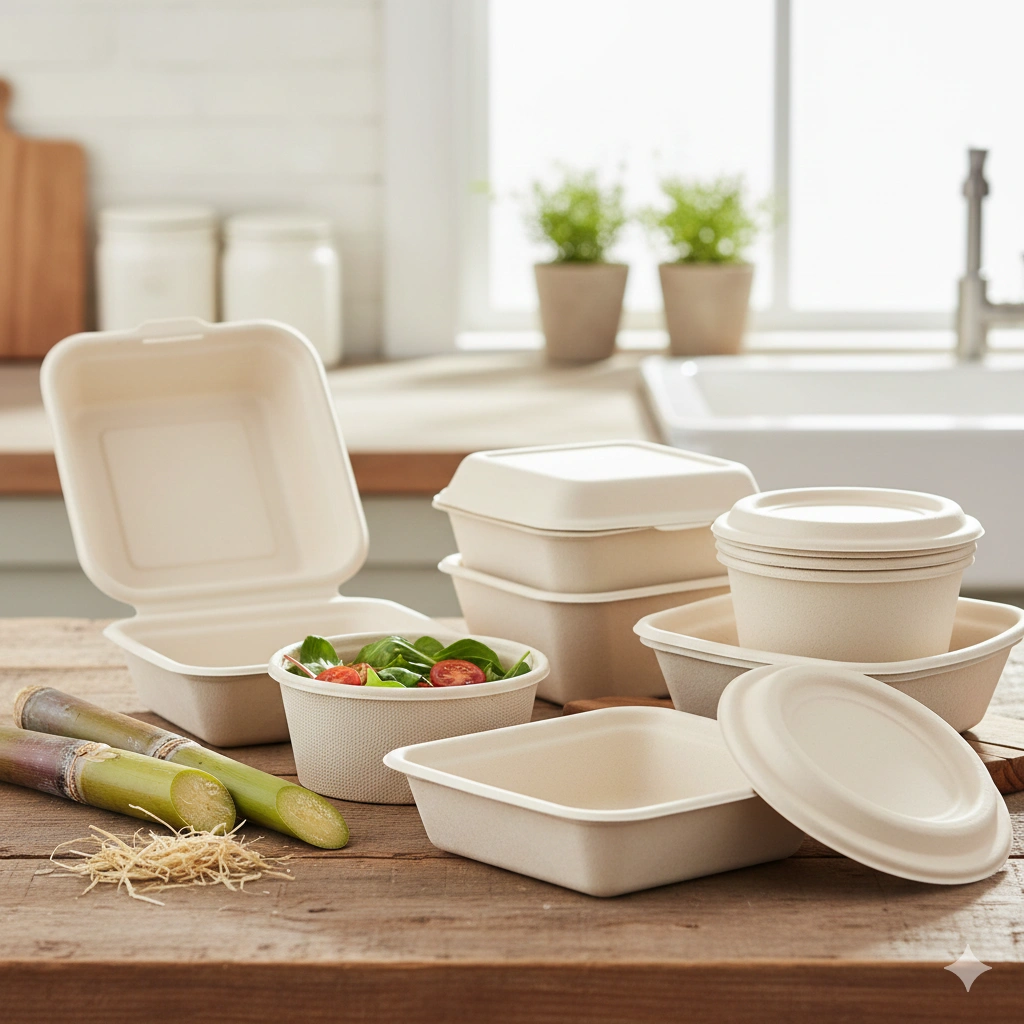
A bagasse container is made from sugarcane residue left after extracting juice. This natural fiber is then molded into sturdy shapes that work extremely well for food service. These containers are available as bagasse boxes, sugarcane containers, bagasse food container, and bagasse clamshell containers.
Since bagasse is derived from agricultural waste, it is one of the most sustainable materials in food packaging. A sugarcane food container or sugarcane bagasse containers are fully compostable, microwave-friendly, leak-resistant, and naturally strong. The molded structure gives them rigidity, making them ideal for curries, gravies, biryanis, and hot meals.
Bagasse performs especially well in high-temperature environments, making it a reliable choice for cloud kitchens and meal delivery brands.
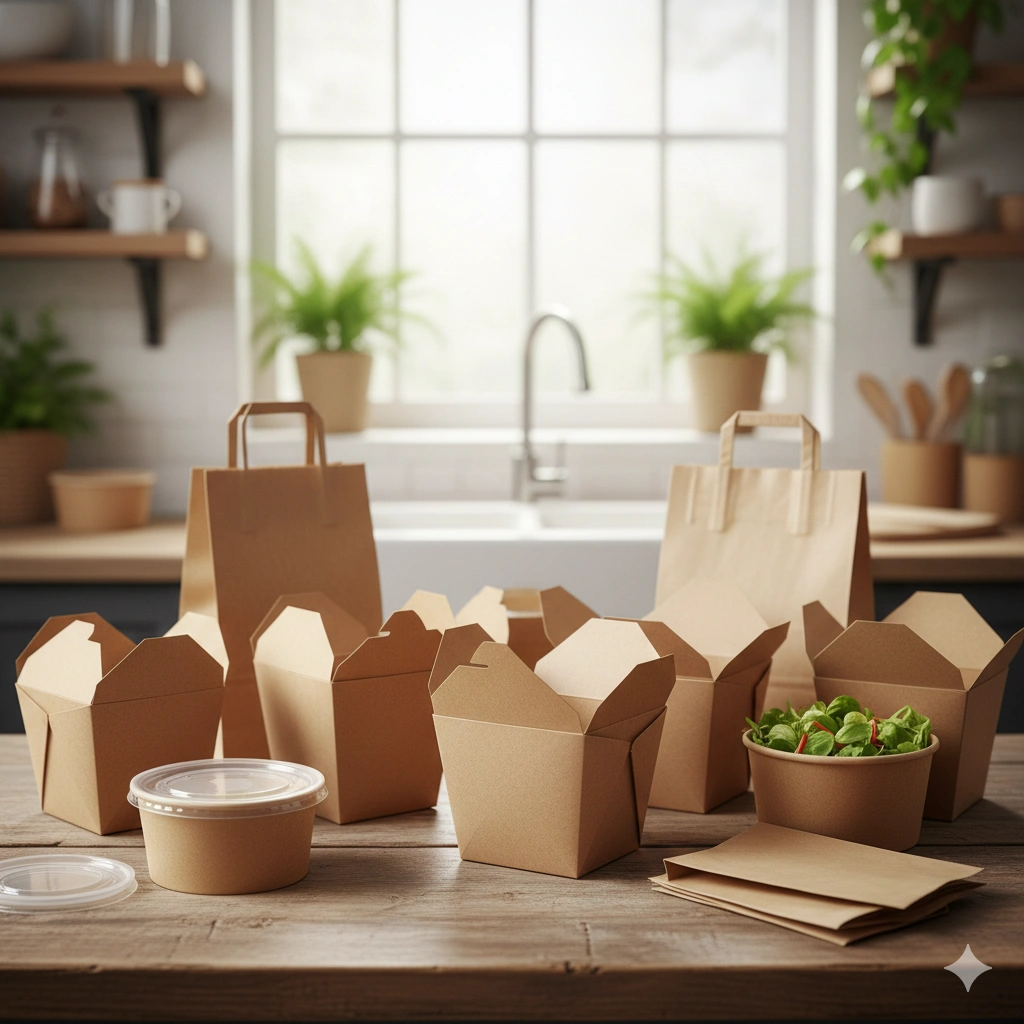
A kraft container is made from kraft paper, which comes from wood pulp processed using the kraft method. This process results in a strong, lightweight, and recyclable paper material used widely in food service.
Businesses typically use kraft food boxes, kraft food containers, kraft bakery boxes, and kraft lunch box options for takeaways. These containers are sturdy, versatile, and visually appealing thanks to their natural brown look.
Kraft is best suited for dry food, bakery items, snacks, noodles, pasta, sandwiches, and salads. While kraft can handle moderate heat, its performance in moist or oily foods depends on the presence of a lining. Some kraft packaging has PLA or PE lining, although this reduces recyclability.
Bagasse
A bagasse food container has excellent structural stability due to its molded shape. Unlike paper, molded sugarcane fibers form a dense, rigid surface. This allows it to carry heavy foods without bending or deforming.
Kraft
A kraft container is strong but more flexible. Its durability heavily depends on paper thickness, the number of layers, and whether it’s coated. While kraft bowls and boxes work well for lighter foods, very heavy or wet meals can weaken them over time.
Verdict: Bagasse offers better strength for hot and heavy dishes.
Bagasse Containers
They withstand temperatures up to 200°C. This makes them suitable for microwaving, reheating, and holding freshly cooked meals. They don’t soften or lose shape even when filled with piping hot gravies.
Kraft Containers
A kraft food container can hold warm food but may weaken when exposed to steam or intense heat. If unlined, the material absorbs moisture and becomes softer.
Verdict: Bagasse wins for high-heat use, reheating, and steaming hot dishes.
Handling oily and liquid dishes is crucial for delivery kitchens. Here’s how both materials respond:
Bagasse
A bagasse container is naturally moisture-resistant. Its fibers do not absorb oil easily, making it ideal for gravy-based meals. Bagasse clamshell containers also prevent spills through secure locking.
Kraft
Kraft requires a lining for moisture and oil protection. Unlined kraft may absorb moisture, causing leaks. Lined kraft performs better but is less eco-friendly.
Verdict: For oily, curry-based, or saucy dishes bagasse is clearly superior.
Bagasse containers have a molded, tight-fitting lid or clamshell structure that prevents leakage even during long-distance delivery.
A kraft container, on the other hand, depends heavily on the lid design. Paper lids or loose-fitting tops can cause leaks if not sealed properly.
Verdict: Bagasse provides more reliable leak-proof performance.
Heavy meals require strong packaging that doesn’t bend or collapse.
A sugarcane food container or bagasse boxes can easily carry full meals, biryani combos, thalis, and 1 kg portions without bending.
Kraft performs well with moderate-weight foods like bread, snacks, and salads. But it isn’t the best option for heavy gravies or multi-item meals.
Verdict: Bagasse holds more weight with ease.
Durability during transport depends on:
vibration
stacking
long-distance handling
temperature variations
Bagasse containers maintain shape under pressure and stacking. Their rigid walls keep food intact even during rough handling.
Kraft containers do well for light meals but may deform if stacked with heavy boxes or exposed to steam.
Verdict: Bagasse is more reliable for delivery-heavy businesses.
|
Durability Factor |
Bagasse Container |
Kraft Container |
|
Heat resistance |
Very good for hot and steaming food; keeps shape well |
Good for warm food; can soften with prolonged steam |
|
Moisture and grease handling |
Naturally strong; ideal for oily and saucy dishes |
Needs lining for wet/oily foods; unlined options weaken |
|
Structural strength |
Thick, molded walls; excellent for heavy portions |
Strength varies with board weight and design |
|
Delivery performance |
Handles stacking and bumps better with liquid-rich meals |
Suitable for lighter, drier items and shorter trips |
|
Storage and handling |
Rigid stacks, less edge damage in handling |
Space-saving flat packs but more sensitive to humidity |
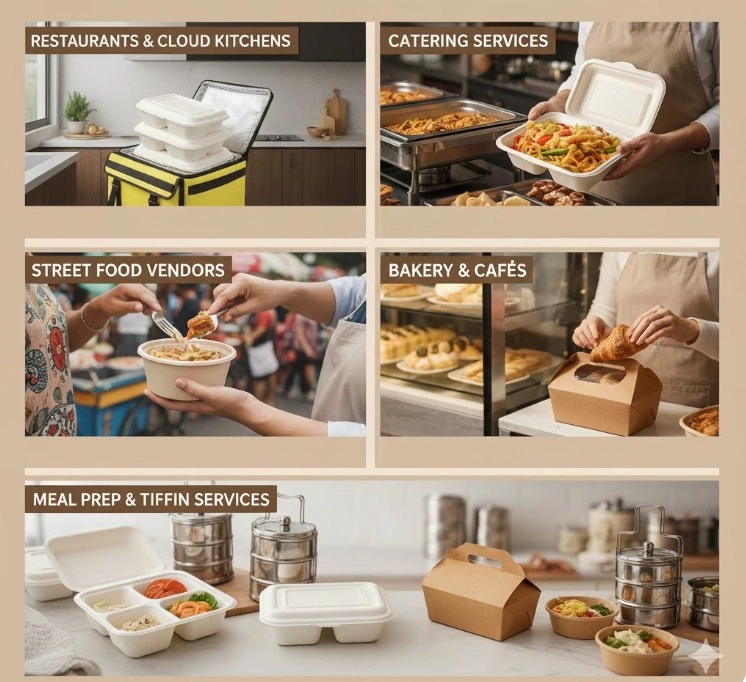
Bagasse boxes ensure leak-proof performance during delivery.
Bagasse clamshell containers handle bulk hot food efficiently.
Sugarcane food containers provide durable handling during live service.
Kraft bakery boxes are excellent for dry cakes, pastries, and bread.
Bagasse lunch trays outperform kraft lunch boxes for daily hot meals.
Both options are sustainable, but their end-of-life behaviors differ.
100% compostable
Breaks down in 45–90 days
Made from agricultural waste
A sugarcane bagasse containers solution is fully biodegradable without the need for chemical coatings.
Recyclable
Compostable only if unlined
Made from paper pulp
Lined kraft reduces eco-friendliness because plastic linings interfere with recycling.
Verdict: Bagasse is more eco-friendly; kraft is recyclable only in certain conditions.
Cost depends on:
quantity ordered
food type
required durability
target customer experience
Bagasse may be slightly costlier upfront, but its performance reduces hidden costs like leakage replacements, double packaging, and customer complaints.
Kraft remains economical for cafés, bakeries, and dry snack brands. A kraft lunch box is affordable and perfect for casual takeaway items.
Verdict: For hot meals and premium delivery, bagasse gives better long-term value. For dry foods, kraft is more cost-efficient.
Cloud kitchens delivering hot meals
Catering companies
Restaurants offering gravies and thalis
Sustainable brands
Meal-prep services
A bagasse container ensures your food stays intact and leak-free.
Cafés and bakeries
QSR chains
Snack brands
Salad and noodle outlets
Dessert shops
A kraft container gives a clean, natural look suitable for lightweight foods.
Safety is non-negotiable in food packaging.
Bagasse container safety benefits:
FDA and ISO food-grade certified
No plastic, wax, or chemical coating
Safe for microwave and freezer use
Kraft container safety considerations:
Often coated with PE or PLA
Coatings may break down under heat
Not always microwave-safe
This makes sugarcane bagasse containers safer for direct food contact under varied temperature conditions.
When comparing bagasse container vs kraft container, the winner in durability is clearly sugarcane bagasse containers. They outperform kraft in:
Heat resistance
Moisture handling
Structural strength
Food safety
Leak prevention
Kraft remains suitable for dry bakery and snack items, but for hot meals and liquid foods, bagasse food containers deliver unmatched reliability.
GoldLeaf India is a trusted supplier of premium eco-friendly food packaging solutions across India. With a strong focus on quality, safety, and sustainability, GoldLeaf India offers a wide range of bagasse boxes, sugarcane food containers, and biodegradable packaging for restaurants, cloud kitchens, caterers, and food brands.
Each product from GoldLeaf India meets strict food-grade standards and is designed for high-performance delivery packaging. From bagasse clamshell containers to customized food trays, the brand ensures durability, leak-proof performance, and environmental responsibility in every order.
Choosing the right packaging impacts customer satisfaction, food safety, and brand reputation. Both bagasse and kraft offer eco-friendly solutions, but their durability differs significantly.
If you serve hot meals or deliver frequently, bagasse gives unmatched performance. If your menu includes dry snacks, bakery items, or salads, kraft offers excellent value and aesthetic appeal.
Understanding these differences can help your business make smarter, sustainable packaging decisions.
Yes, bagasse containers offer higher structural strength and moisture resistance than kraft containers.
Yes, bagasse food containers safely hold boiling liquids without leakage or deformation.
No, kraft containers absorb moisture unless they are plastic-coated.
Bagasse is better for hot, oily, and liquid foods. Kraft suits dry foods.
Yes, sugarcane bagasse containers are fully compostable within 60–90 days.
Kraft is only safe for short-term warm food and not ideal for high-heat liquids.
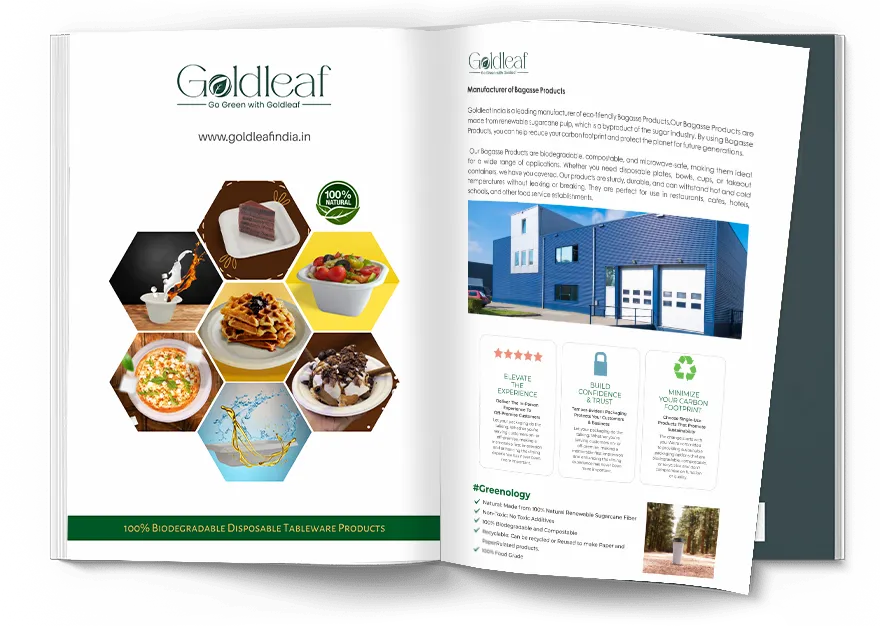
Goldleaf India Adalah pengeluar produk Bagasse yang mesra alam. Produk Bagasse kami diperbuat daripada pulpa tebu yang boleh diperbaharui, yang merupakan hasil sampingan industri gula.
© 2024 , Goldleaf ,
Semua hak terpelihara.
Made & Managed by Lightlink Solutions